GeForce RTX 3060 Ti & GeForce RTX 3060 12GB share many similarities, but there are also important differences, such as quality, performance, features, design, and connectivity. If you want the best one between them, I Would recommend the GeForce RTX 3060 Ti rather than the GeForce RTX 3060 12GB.
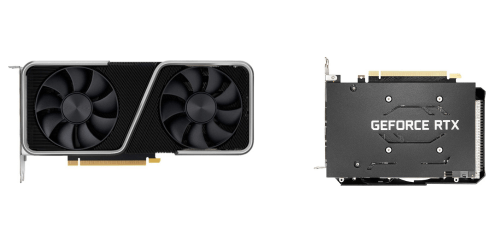
Why Do I Recommend The GeForce RTX 3060 Ti?
- The GeForce RTX 3060 Ti has a higher 4864 CUDA core count for stronger raw shader performance and higher frame rates in demanding games, while the GeForce RTX 3060 12GB uses fewer 3584 CUDA cores.
- GeForce RTX 3060 Ti features a wider 256-bit memory bus for faster data transfer and smoother performance at higher resolutions, whereas the GeForce RTX 3060 12GB uses a narrower 192-bit memory bus.
- It includes higher memory bandwidth for improved texture streaming and reduced bottlenecks in 1440p gaming, while the GeForce RTX 3060 12GB delivers lower memory bandwidth.
- The GeForce RTX 3060 Ti comes with more RT cores for better real-time ray tracing performance and more stable lighting effects, whereas the GeForce RTX 3060 12GB has fewer RT cores.
- GeForce RTX 3060 Ti includes more Tensor cores for faster DLSS processing and higher upscaled frame rates, while the GeForce RTX 3060 12GB uses fewer Tensor cores.
- It has more ROPs for higher pixel fill rates and smoother performance in high-resolution scenes, while the GeForce RTX 3060 12GB has fewer ROPs.
- The GeForce RTX 3060 Ti features a larger GA104 GPU die for higher overall compute throughput in gaming and creative workloads, whereas the GeForce RTX 3060 12GB is based on the smaller GA106 die.
- GeForce RTX 3060 Ti supports stronger sustained performance at 1440p for demanding modern games, while the GeForce RTX 3060 12GB is primarily optimized for 1080p-focused gaming.
Maybe the GeForce RTX 3060 12GB can make you comfortable because it’s a little bit cheaper than the GeForce RTX 3060 Ti. But you have to compromise all the above-mentioned features. Now the Decision is Yours. I hope it was helpful to choose the right one.
Side-by-Side Comparison
| Feature | GeForce RTX 3060 Ti | GeForce RTX 3060 12GB |
| CUDA Cores | 4864 | 3584 |
| RT Cores | 38 | 28 |
| Tensor Cores | 152 | 112 |
| Base Clock | 1410 MHz | 1320 MHz |
| Memory Bus | 256-bit | 192-bit |
| Memory Bandwidth | 448 GB/s | 360 GB/s |
| L2 Cache | 4 MB | 3 MB |
| ROPs | 80 | 48 |
| Texture Units | 152 | 112 |
| Typical Board Power | 200 W | 170 W |
| Die Size | Larger | Smaller |
| Compute Performance | Higher | Lower |
| Ray Tracing Performance | Higher | Lower |
| Memory Throughput | Higher | Lower |
| Power Draw Class | Higher | Lower |
| Price | Check RTX 3060 Ti Price | Check RTX 3060 12GB Price |
What Common Both Can Do?
- Architecture: Both graphics cards are based on NVIDIA’s Ampere architecture. This ensures modern feature support, strong efficiency improvements over previous generations, and broad compatibility with current games and applications.
- GPU Brand: Each model is designed and supported by NVIDIA. This matters because users receive consistent driver updates, software features, and ecosystem support across both cards.
- Manufacturing Process: Both GPUs are built using an 8 nm manufacturing process. This process balances performance and power efficiency, allowing compact card designs with solid thermal characteristics.
- Ray Tracing Support: Both cards support real-time ray tracing. This enables realistic lighting, reflections, and shadows in supported games, improving overall visual fidelity.
- DLSS Support: Each GPU supports NVIDIA DLSS technology. DLSS uses AI upscaling to increase frame rates while maintaining image quality, which is especially helpful in demanding games.
- DirectX Support: Both cards support DirectX 12 Ultimate. This ensures compatibility with modern rendering features such as mesh shaders, variable rate shading, and ray tracing.
- Vulkan Support: Vulkan API support is present on both GPUs. This allows efficient low-level graphics performance in supported games and professional applications.
- PCIe Interface: Both models use a PCIe 4.0 interface. This provides high bandwidth communication between the GPU and the system, ensuring smooth performance on modern platforms.
- GDDR6 Memory Type: Each card uses GDDR6 memory. This memory type delivers fast data transfer speeds suitable for gaming and creative workloads.
- HDMI 2.1 Support: Both GPUs include HDMI 2.1 support. This enables higher resolutions and refresh rates, such as 4K at high frame rates, on compatible displays.
- DisplayPort 1.4a: DisplayPort 1.4a is supported on both cards. This allows high-resolution, high-refresh-rate monitor configurations and advanced display features.
- NVENC Encoder: Both GPUs feature NVIDIA’s NVENC hardware encoder. This is important for efficient video recording and streaming with minimal performance impact.
- NVDEC Decoder: Each model includes NVDEC hardware decoding. This enables smooth playback of high-resolution video formats with reduced CPU usage.
- Maximum Displays: Both cards can drive up to four displays simultaneously. This is useful for multi-monitor gaming setups and productivity workflows.
- Multi-Monitor Support: Full multi-monitor support is available on both GPUs. Users can easily expand their workspace or immersive gaming environment across several screens.
- VR Ready: Both graphics cards are VR-ready. This ensures compatibility with modern virtual reality headsets and VR applications.
- Ansel Support: NVIDIA Ansel is supported on both models. This allows users to capture high-quality in-game screenshots with advanced camera controls.
- G-SYNC Support: Both GPUs support NVIDIA G-SYNC. This reduces screen tearing and stuttering by synchronizing the display refresh rate with GPU output.
- Game Ready Drivers: Each card benefits from NVIDIA Game Ready drivers. These drivers deliver optimized performance and stability for new game releases.
Common Features
| Feature | GeForce RTX 3060 Ti | GeForce RTX 3060 12GB |
| Architecture | Ampere | Ampere |
| GPU Brand | NVIDIA | NVIDIA |
| Manufacturing Process | 8 nm | 8 nm |
| Ray Tracing Support | Yes | Yes |
| DLSS Support | Yes | Yes |
| DirectX Support | DirectX 12 Ultimate | DirectX 12 Ultimate |
| Vulkan Support | Yes | Yes |
| PCIe Interface | PCIe 4.0 | PCIe 4.0 |
| GDDR6 Memory Type | Yes | Yes |
| HDMI 2.1 Support | Yes | Yes |
| DisplayPort 1.4a | Yes | Yes |
| NVENC Encoder | Yes | Yes |
| NVDEC Decoder | Yes | Yes |
| Maximum Displays | 4 | 4 |
| Multi-Monitor Support | Yes | Yes |
| VR Ready | Yes | Yes |
| Ansel Support | Yes | Yes |
| G-SYNC Support | Yes | Yes |
| Game Ready Drivers | Yes | Yes |
| Price | Check RTX 3060 Ti Price | Check RTX 3060 12GB Price |
FAQ
Is the GeForce RTX 3060 Ti better than the GeForce RTX 3060 12GB for gaming? Can both the GeForce RTX 3060 Ti and GeForce RTX 3060 12GB run modern AAA games? Is the extra 12GB VRAM on the GeForce RTX 3060 useful? Do both GPUs support ray tracing and DLSS? Which GPU is better for 1440p gaming? Are both cards suitable for content creation tasks? Do the two cards use the same architecture? Is power consumption different between the two GPUs? Can both GPUs be used with PCIe 4.0 motherboards? Are cooling and noise levels similar? Do both cards support multiple monitors? Which card is better for competitive esports titles? Is the GeForce RTX 3060 12GB more future-proof because of VRAM? Do both GPUs support HDMI 2.1 and DisplayPort 1.4a? Which GPU is the better value depends on what? |