3080 10GB vs 12GB – Check Which One Is Best & Why?

GeForce RTX 3080 12GB & GeForce RTX 3080 10GB share many similarities, but there are also important differences, such as quality, performance, features, design, and connectivity. If you want the best one between them, I Would recommend the GeForce RTX 3080 12GB rather than the GeForce RTX 3080 10GB. 
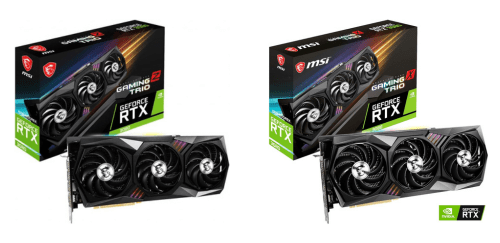
Why Do I Recommend The GeForce RTX 3080 12GB

  • The GeForce RTX 3080 12GB comes with 12GB GDDR6X memory for handling higher-resolution textures and memory-heavy games more smoothly at 4K, while the GeForce RTX 3080 10GB comes with 10GB GDDR6X memory.
  • GeForce RTX 3080 12GB features a 384-bit memory bus for faster data transfer between the GPU and memory in bandwidth-intensive workloads, whereas the GeForce RTX 3080 10GB uses a 320-bit memory bus.
  • It includes higher memory bandwidth for maintaining more stable frame rates in modern games with large assets and complex scenes, while the GeForce RTX 3080 10GB has lower memory bandwidth.
  • The GeForce RTX 3080 12GB has 8960 CUDA cores for stronger parallel processing performance in gaming, rendering, and GPU-accelerated applications, while the GeForce RTX 3080 10GB has 8704 CUDA cores.
  • GeForce RTX 3080 12GB supports a higher total board power limit for sustaining boost clocks under prolonged heavy loads, whereas the GeForce RTX 3080 10GB operates with a lower power limit.
  • It includes 70 RT cores for improved ray tracing performance in visually demanding titles, while the GeForce RTX 3080 10GB includes 68 RT cores.
  • The GeForce RTX 3080 12GB comes with additional Tensor cores for better AI-driven performance in features such as DLSS and creative workloads, while the GeForce RTX 3080 10GB has fewer Tensor cores.
  • GeForce RTX 3080 12GB features greater memory headroom for professional workloads like video editing and 3D rendering with large project files, whereas the GeForce RTX 3080 10GB provides less available VRAM for such tasks.

Maybe the GeForce RTX 3080 10GB price can make you comfortable because it’s a little bit cheaper than the GeForce RTX 3080 12GB. But you have to compromise all the above-mentioned features. Now the Decision is Yours. I hope it was helpful to choose the right one.

Side By Side Comparison

FeatureGeForce RTX 3080 12GBGeForce RTX 3080 10GB
VRAM Capacity12GB GDDR6X10GB GDDR6X
Memory Bus Width384-bit320-bit
Memory Bandwidth912 GB/s760 GB/s
CUDA Cores89608704
SM Count7068
Tensor Cores280272
RT Cores7068
L2 Cache6 MB5 MB
FP32 Throughput~30.6 TFLOPs~29.8 TFLOPs
Total Board Power350 W320 W
Memory Chips Count12 modules10 modules
Memory Interface Channels12×32-bit10×32-bit
Launch Generation2022 refresh2020 original
Die ConfigurationGA102-220GA102-200
Thermal HeadroomHigherLower
PriceCheck 3080 12GB PriceCheck 3080 10GB Price

What Common Both Can Do?

  • GPU Architecture: Both graphics cards are based on NVIDIA’s Ampere architecture. This ensures similar efficiency characteristics, feature sets, and support for modern rendering technologies across both models.
  • GPU Die: Each model uses the GA102 die, which places them in the same high-end GPU class. This means core design, instruction handling, and overall architectural behavior are fundamentally the same.
  • Manufacturing Process: Both GPUs are manufactured using Samsung’s 8 nm process. This shared process affects power efficiency, thermal behavior, and achievable clock speeds in a similar way.
  • CUDA Architecture: Each card relies on NVIDIA CUDA cores for parallel processing. This is important for gaming, rendering, and compute workloads that depend on CUDA acceleration.
  • Ray Tracing Support: Both models support hardware-accelerated ray tracing. This allows realistic lighting, reflections, and shadows in supported games and applications.
  • Tensor Cores: Third-generation Tensor cores are present in both GPUs. These cores enable AI-based workloads such as DLSS and other machine-learning-accelerated tasks.
  • RT Cores: Second-generation RT cores are shared across both versions. This ensures similar ray-tracing feature compatibility and visual effects support.
  • DLSS Support: Both graphics cards support NVIDIA DLSS. This technology improves performance by rendering at lower resolutions and upscaling with AI.
  • DirectX Support: DirectX 12 Ultimate is supported on both models. This guarantees compatibility with modern game engines and advanced graphics features.
  • Vulkan Support: Each GPU supports Vulkan 1.2. This allows efficient low-level graphics access in supported games and professional applications.
  • Memory Type: Both cards use GDDR6X memory. This provides high data transfer rates essential for demanding gaming and graphics workloads.
  • Memory Speed: The memory runs at the same 19 Gbps speed on both models. This ensures similar memory latency characteristics despite capacity differences.
  • PCIe Interface: PCIe 4.0 x16 is used on both GPUs. This allows high-bandwidth communication with modern CPUs and platforms.
  • NVENC / NVDEC: Hardware video encoding and decoding are available on both cards. This is important for streaming, recording, and media workloads.
  • Multi-Monitor Support: Each GPU supports multi-monitor setups. This enables productivity workflows and immersive multi-display gaming configurations.
  • VR Ready: Both models are VR-ready. They meet the performance and feature requirements for modern virtual reality headsets.
  • HDMI Standard: HDMI 2.1 support is included on both cards. This allows high-refresh-rate and high-resolution output to modern displays and TVs.
  • DisplayPort Standard: DisplayPort 1.4a is supported by both GPUs. This ensures compatibility with high-resolution and high-refresh-rate monitors.

Common Features

FeatureGeForce RTX 3080 12GBGeForce RTX 3080 10GB
GPU ArchitectureAmpereAmpere
GPU DieGA102GA102
Manufacturing ProcessSamsung 8 nmSamsung 8 nm
CUDA ArchitectureNVIDIA CUDANVIDIA CUDA
Ray Tracing SupportYesYes
Tensor Cores3rd Gen3rd Gen
RT Cores2nd Gen2nd Gen
DLSS SupportYesYes
DirectX SupportDirectX 12 UltimateDirectX 12 Ultimate
Vulkan SupportVulkan 1.2Vulkan 1.2
Memory TypeGDDR6XGDDR6X
Memory Speed19 Gbps19 Gbps
PCIe InterfacePCIe 4.0 x16PCIe 4.0 x16
NVENC / NVDECYesYes
Multi-Monitor SupportYesYes
VR ReadyYesYes
HDMI StandardHDMI 2.1HDMI 2.1
DisplayPort StandardDisplayPort 1.4aDisplayPort 1.4a
Price Check 3080 12GB Price Check 3080 10GB Price

FAQ

Is there a performance difference between the GeForce RTX 3080 12GB and RTX 3080 10GB?
Yes, the GeForce RTX 3080 12GB delivers slightly higher performance due to more CUDA cores and higher memory bandwidth, which can result in modest gains in demanding games and GPU-heavy workloads.

Do both graphics cards use the same GPU architecture?
Both models are based on NVIDIA’s Ampere architecture, meaning they share the same core design, feature set, and overall technology foundation.

Is the memory type the same on both cards?
Yes, both the GeForce RTX 3080 12GB and RTX 3080 10GB use GDDR6X memory, ensuring similar memory speed characteristics.

Does the extra VRAM on the RTX 3080 12GB matter for gaming?
The additional VRAM can help in high-resolution gaming, texture-heavy titles, and modded games where memory usage exceeds 10GB.

Are both cards suitable for 4K gaming?
Yes, both GPUs are designed for 4K gaming, although the 12GB version provides more headroom for newer titles and future games.

Do both models support ray tracing and DLSS?
Both graphics cards fully support hardware ray tracing and NVIDIA DLSS, offering similar visual features and AI-based performance enhancements.

Is power consumption the same between the two versions?
No, the RTX 3080 12GB has a higher power limit, which can lead to increased power draw compared to the 10GB model.

Do both GPUs require the same power supply?
Both models generally recommend a 750W power supply, depending on the rest of the system configuration.

Are cooling requirements similar for both cards?
Cooling requirements are broadly similar, but the RTX 3080 12GB may run slightly warmer due to higher power limits, depending on the specific card design.

Do both cards support PCIe 4.0?
Yes, both GPUs use a PCIe 4.0 x16 interface, ensuring compatibility with modern motherboards and CPUs.

Is there a difference in video output support?
Both cards support HDMI 2.1 and DisplayPort 1.4a, allowing high-resolution and high-refresh-rate displays.

Are both GPUs good for content creation tasks?
Yes, both are well-suited for video editing, 3D rendering, and GPU-accelerated workloads, with the 12GB version offering more memory headroom for large projects.

Do both models support multi-monitor setups?
Yes, both GPUs support multi-monitor configurations, making them suitable for productivity and immersive gaming setups.

Is driver support the same for both cards?
Both models receive the same NVIDIA driver updates, ensuring equal software support and feature updates.

Which version is more future-proof?
The GeForce RTX 3080 12GB is generally more future-proof due to its larger VRAM capacity and slightly stronger specifications, especially for upcoming games and applications.

Quick Deal Access