Oura Ring 4 & Ringconn Gen2 share many similarities, but there are also important differences, such as quality, performance, features, design, and connectivity. If you want the best one between them, I Would recommend the Oura Ring 4 rather than the Ringconn Gen2.
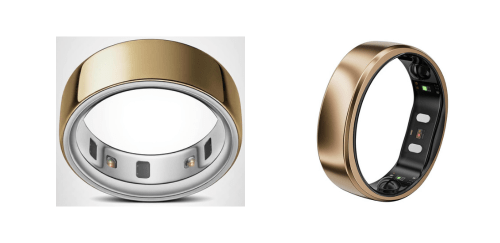
Why Do I Recommend The Oura Ring 4?
- The Oura Ring 4 has a structured Readiness Score for providing a clear daily recovery and preparedness indicator based on sleep, HRV, and temperature trends, while RingConn Gen 2 uses general wellness metrics without a dedicated readiness score.
- Oura Ring 4 features advanced sleep staging algorithms for more precise identification of light, deep, and REM sleep patterns over time, whereas RingConn Gen 2 uses simpler sleep stage classification.
- It includes long-term trend analysis and historical baselines to help identify subtle changes in health and recovery over weeks and months, while RingConn Gen 2 focuses more on daily summaries.
- The Oura Ring 4 supports refined temperature deviation analysis for early detection of illness, menstrual cycle changes, or recovery strain, while the RingConn Gen 2 tracks temperature with more limited contextual interpretation.
- Oura Ring 4 has deeper HRV analytics integrated into recovery and readiness insights for more actionable stress and recovery assessment, whereas RingConn Gen 2 presents HRV data with fewer interpretive layers.
- It comes with a highly polished app interface for clearer visualization of complex health data and long-term patterns, while RingConn Gen 2 uses a more basic dashboard layout.
- The Oura Ring 4 supports frequent algorithm and insight updates for continuously improving accuracy and health modeling over time, while the RingConn Gen 2 has less frequent analytical refinements.
- Oura Ring 4 includes a more mature health research-backed ecosystem for translating biometric data into daily guidance and trends, while RingConn Gen 2 relies on a lighter wellness-focused framework.
Maybe the Ringconn Gen2 can make you comfortable because it’s a little bit cheaper than the Oura Ring 4. But you have to compromise all the above-mentioned features. Now the Decision is Yours. I hope it was helpful to choose the right one.
Side-by-Side Comparison
| Feature | Oura Ring 4 | Ringconn Gen2 |
| Subscription requirement | Yes | No |
| Core scoring | Readiness, Sleep, Activity | Wellness/Sleep/Recovery metrics |
| Stress/daytime resilience | Daytime Stress / Resilience-style insights | Stress insights (typically simpler) |
| Sleep staging depth | Advanced staging emphasis | Sleep staging emphasis |
| App ecosystem positioning | Research/insight-heavy | Simpler dashboard focus |
| Integrations | Fewer native integrations | Broader common integrations |
| Water rating style | Swim-friendly positioning | Water rating varies by model/region |
| Ring profile | Smoother low-profile styling | Slightly thicker profile |
| Finish/style options | More premium-style finishes | Multiple finish options |
| Price | Check Oura Ring 4 Price | Check Ringconn Gen2 Price |
What Common Both Can Do?
- Ring-based wearable: Both devices are designed as smart rings, allowing continuous health tracking in a compact, screen-free form factor. This makes them comfortable for all-day and overnight wear without the bulk of a smartwatch.
- Continuous heart rate tracking: Each ring monitors heart rate automatically throughout the day and night. This continuous data helps build accurate baselines for overall cardiovascular trends.
- Nighttime HRV tracking: Both devices measure heart rate variability during sleep. HRV is an important indicator of recovery, stress, and nervous system balance.
- Sleep duration tracking: Each ring automatically records total sleep time without requiring manual input. This allows users to understand long-term sleep quantity patterns.
- Sleep stage analysis: Both products break sleep into stages such as light, deep, and REM. This helps users evaluate sleep quality rather than just total hours slept.
- Blood oxygen (SpO₂) tracking: Both rings monitor blood oxygen levels during sleep. This feature is useful for identifying breathing irregularities or changes in overnight oxygen saturation.
- Skin temperature tracking: Each device tracks finger skin temperature and compares it against a personal baseline. Temperature trends can reflect changes related to recovery, illness, or physiological stress.
- Respiratory rate tracking: Both models measure breathing rate during sleep. Respiratory trends provide additional insight into sleep quality and overall wellness.
- Step counting: Each ring tracks daily steps using motion sensors. This supports basic activity monitoring and movement awareness.
- Daily activity tracking: Both devices monitor overall daily movement levels. This helps users understand how active they are beyond structured workouts.
- Automatic sleep detection: Both rings automatically detect when the user falls asleep and wakes up. This removes the need for manual sleep logging.
- Nap detection: Each device can recognize naps taken during the day. This ensures that total rest time is accounted for in daily insights.
- Silent vibration alarm: Both rings support vibration-based alarms. This allows users to wake up discreetly without sound.
- Water resistance: Each ring is water resistant for everyday activities like handwashing and showering. This makes them suitable for continuous wear without frequent removal.
- Rechargeable battery: Both products use internal rechargeable batteries. This supports repeated daily use without disposable components.
- Mobile app support: Both rings connect to companion apps on iOS and Android. The apps are essential for viewing health data, trends, and insights.
- Titanium construction: Both models use titanium in their construction. This provides durability, corrosion resistance, and a lightweight feel suitable for long-term wear.
Common Features
| Feature | Oura Ring 4 | Ringconn Gen2 |
| Ring-based wearable | Yes | Yes |
| Continuous heart rate tracking | Yes | Yes |
| Nighttime HRV tracking | Yes | Yes |
| Sleep duration tracking | Yes | Yes |
| Sleep stage analysis | Yes | Yes |
| Blood oxygen (SpO₂) tracking | Yes | Yes |
| Skin temperature tracking | Yes | Yes |
| Respiratory rate tracking | Yes | Yes |
| Step counting | Yes | Yes |
| Daily activity tracking | Yes | Yes |
| Automatic sleep detection | Yes | Yes |
| Nap detection | Yes | Yes |
| Silent vibration alarm | Yes | Yes |
| Water resistance | Yes | Yes |
| Rechargeable battery | Yes | Yes |
| Mobile app support | iOS, Android | iOS, Android |
| Titanium construction | Yes | Yes |
| Price | Check Oura Ring 4 Price | Check Ringconn Gen2 Price |
FAQ
Is Oura Ring 4 compatible with both iOS and Android? Is RingConn Gen 2 compatible with both iOS and Android? Do both rings track sleep automatically? Do Oura Ring 4 and RingConn Gen 2 track sleep stages? Can both rings measure heart rate continuously? Do both devices support HRV tracking? Do Oura Ring 4 and RingConn Gen 2 measure blood oxygen levels? Is skin temperature tracking available on both rings? Do both rings track respiratory rate? Are naps detected by both Oura Ring 4 and RingConn Gen 2? Do both rings support step counting and daily activity tracking? Are Oura Ring 4 and RingConn Gen 2 water resistant? Do both devices use vibration-based alarms? Do Oura Ring 4 and RingConn Gen 2 require charging? Are both rings made with durable materials suitable for daily wear? |