Garmin HRM 600 & Garmin HRM Pro Plus share many similarities, but there are also important differences, such as quality, performance, features, design, and connectivity. If you want the best one between them, I Would recommend the Garmin HRM 600 rather than the Garmin HRM Pro Plus.
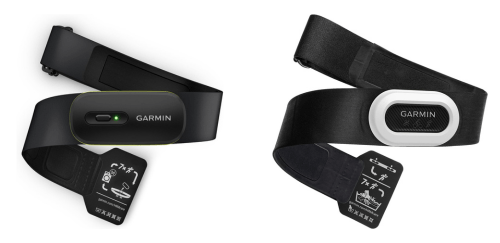
Why Do I Recommend The Garmin HRM 600?
- The Garmin HRM 600 features a rechargeable battery for eliminating recurring coin-cell replacements and reducing long-term maintenance costs, while Garmin HRM Pro Plus uses a CR2032 battery that requires periodic replacement.
- Garmin HRM 600 includes a detachable sensor module for easier strap cleaning and longer strap lifespan through modular replacement, whereas the Garmin HRM Pro Plus uses a fixed integrated sensor that requires replacing the entire unit if the strap wears out.
- It comes with a physical control button for manual activation and status control without a connected device, while the Garmin HRM Pro Plus relies entirely on automatic behavior with no onboard controls.
- The Garmin HRM 600 features a tri-color status LED for immediate visual confirmation of battery, pairing, and recording state, whereas the Garmin HRM Pro Plus has no visual status indicator on the sensor.
- Garmin HRM 600 supports app-controlled standalone activity recording for capturing workouts like team sports without wearing a watch, while the Garmin HRM Pro Plus focuses primarily on background store-and-forward syncing tied to a watch session.
- It supports dedicated team-sport speed and distance tracking for accurate movement data in GPS-restricted environments, whereas the Garmin HRM Pro Plus does not list team-sport speed and distance capture as a supported feature.
- The Garmin HRM 600 is available in multiple strap sizes for a more precise and secure fit across different body types, whereas the Garmin HRM Pro Plus uses a single strap size.
- Garmin HRM 600 lists secure Bluetooth Low Energy connections for improved data integrity in multi-device training setups, whereas the Garmin HRM Pro Plus does not explicitly list secure BLE connectivity as a defined feature.
Maybe the Garmin HRM Pro Plus price can make you comfortable because it’s a little bit cheaper than the Garmin HRM 600. But you have to compromise all the above-mentioned features. Now the Decision is Yours. I hope it was helpful to choose the right one.
Side By Side Comparison
| Feature | Garmin HRM 600 | Garmin HRM Pro Plus |
| Battery type | Rechargeable | CR2032 replaceable |
| Charging | Proprietary charging plug/cable | No charging |
| Detachable sensor module | Yes | No |
| Status LED | Tri-color | None listed |
| Physical button | Yes | None listed |
| Module dimensions | 68.0 × 31.6 × 10.0 mm | 53.7 × 29.6 × 8.6 mm |
| Weight (with strap) | 61 g | 52 g |
| Module-only weight | 18 g | Not listed |
| Strap sizing | XS-S or M-XL | One size |
| Minimum strap length | 56 cm | 60 cm |
| Max chest size (no extender) | Up to 119 cm | Up to 106 cm |
| Secure BLE connections (listed) | Yes | Not listed |
| App-controlled activity recording (listed) | Yes | Not listed |
| Team-sport speed & distance (listed) | Yes | Not listed |
| Price | Check HRM 600 Price | Check HRM Pro Plus Price |
What Common Both Can Do?
- Heart rate monitoring: Both chest straps are designed to deliver high-accuracy heart rate data using electrical signal detection rather than optical sensors. This matters for athletes who need consistent and precise readings during high-intensity or interval training.
- Chest-strap design: Each model uses a traditional chest-mounted strap that sits close to the heart. This placement improves signal quality compared to wrist-based sensors, especially during rapid movement.
- ANT+ connectivity: Both support ANT+, allowing seamless pairing with Garmin watches, bike computers, and gym equipment. This ensures stable connections in multi-sensor training environments.
- Bluetooth Low Energy (BLE): Each model supports BLE for pairing with smartphones, fitness apps, and compatible devices. This enables broader compatibility beyond Garmin-only ecosystems.
- Dual wireless protocols: The combination of ANT+ and BLE allows both straps to broadcast heart rate data to multiple devices simultaneously. This is useful for athletes who record sessions on more than one device.
- Real-time HR broadcast: Both models transmit heart rate data live during workouts. This allows users to monitor intensity zones and pacing as they train.
- HRV measurement: Each strap supports heart rate variability tracking. HRV data is important for assessing recovery status and overall training load.
- Running dynamics support: Both models work with compatible Garmin devices to provide advanced running metrics. These insights help runners analyze form and efficiency over time.
- Pace & distance (indoor): Both can contribute pace and distance data for indoor activities such as treadmill running. This ensures more complete workout records when GPS is unavailable.
- Calories burned: Each strap calculates calorie expenditure using heart rate and activity data. This helps users better understand energy use across workouts.
- Store-and-forward memory: Both models can store workout data when out of range of a watch or phone and sync it later. This is especially useful for swimming or team sports.
- Swim-compatible design: Each strap is built to function in water without damage. This makes them suitable for triathletes and swimmers.
- Pool swim HR capture: Both record heart rate during pool swims and transfer the data afterward. This fills a gap where wrist-based sensors often struggle.
- Open-water swim HR capture: Each model supports heart rate recording in open water. This is valuable for outdoor swimmers and triathlon training.
- Machine-washable strap: Both straps are designed to be cleaned easily after workouts. This improves hygiene and long-term comfort.
- Soft, adjustable strap: Each uses an elastic, adjustable strap designed for comfort during long sessions. A good fit reduces movement and improves data accuracy.
- Garmin Connect compatibility: Both sync seamlessly with the Garmin Connect platform. This allows centralized analysis, history tracking, and training insights.
- Multi-device pairing: Each model can connect to multiple compatible devices. This flexibility supports varied training setups.
- Firmware updatable: Both support firmware updates to improve performance or compatibility over time. This helps extend product lifespan.
- Water resistance: Both are rated at 5 ATM, meaning they can handle swimming and heavy sweat exposure. This ensures durability across diverse training conditions.
Common Features
| Feature | Garmin HRM 600 | Garmin HRM Pro Plus |
| Heart rate monitoring | Yes | Yes |
| Chest-strap design | Yes | Yes |
| ANT+ connectivity | Yes | Yes |
| Bluetooth Low Energy (BLE) | Yes | Yes |
| Dual wireless protocols | ANT+ / BLE | ANT+ / BLE |
| Real-time HR broadcast | Yes | Yes |
| HRV measurement | Yes | Yes |
| Running dynamics support | Yes | Yes |
| Pace & distance (indoor) | Yes | Yes |
| Calories burned | Yes | Yes |
| Store-and-forward memory | Yes | Yes |
| Swim-compatible design | Yes | Yes |
| Pool swim HR capture | Yes | Yes |
| Open-water swim HR capture | Yes | Yes |
| Machine-washable strap | Yes | Yes |
| Soft, adjustable strap | Yes | Yes |
| Garmin Connect compatibility | Yes | Yes |
| Multi-device pairing | Yes | Yes |
| Firmware updatable | Yes | Yes |
| Water resistance | 5 ATM | 5 ATM |
| Price | Check HRM 600 Price | Check HRM Pro Plus Price |