Moto G Power & Moto G share many similarities, but there are also important differences, such as quality, performance, features, design, and connectivity. If you want the best one between them, I Would recommend the Moto G Power rather than the Moto G.
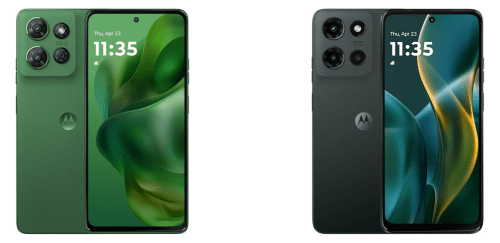
Why Do I Recommend The Moto G Power?
- The Moto G Power comes with the MediaTek Dimensity 7020 chipset for faster everyday performance and better long-term responsiveness, while the Moto G uses the MediaTek Helio G85 chipset.
- Moto G Power supports 5G connectivity to enable significantly faster mobile data speeds and lower latency for streaming and downloads, whereas Moto G supports only 4G LTE connectivity.
- It includes 8 GB RAM for smoother multitasking and more stable app switching, while the Moto G comes with 4 GB RAM.
- The Moto G Power supports 15W wireless charging for more convenient and cable-free daily charging, while the Moto G does not support wireless charging.
- Moto G Power has optical image stabilization on the main camera for sharper photos and steadier videos in low-light conditions, whereas the Moto G uses electronic stabilization only.
- It includes an 8 MP ultrawide camera to capture more of the scene in landscapes and group shots, while the Moto G uses a 2 MP macro camera.
- The Moto G Power features a 120 Hz display refresh rate for smoother scrolling and more fluid animations, while the Moto G uses a 90 Hz display.
- Moto G Power comes with stereo speakers for louder and more immersive audio during media playback and gaming, whereas the Moto G uses a single mono speaker.
Maybe the Moto G price can make you comfortable because it’s a little bit cheaper than the Moto G Power. But you have to compromise all the above-mentioned features. Now the Decision is Yours. I hope it was helpful to choose the right one.
Side By Side Comparison
| Feature | Moto G Power | Moto G |
| Chipset | Dimensity 7020 | Helio G85 |
| Network Support | 5G + 4G LTE | 4G LTE |
| CPU Architecture | 2×A78 + 6×A55 | 2×A75 + 6×A55 |
| GPU | IMG BXM-8-256 | Mali-G52 MC2 |
| RAM | 8 GB | 4 GB |
| Charging Speed | 30W wired | 20W wired |
| Wireless Charging | 15W | No |
| Rear Camera Stabilization | OIS | EIS |
| Secondary Rear Camera | 8 MP ultrawide | 2 MP macro |
| Front Camera | 16 MP | 8 MP |
| Video Recording | 1080p with OIS | 1080p EIS only |
| Display Refresh Rate | 120 Hz | 90 Hz |
| Display Glass | Gorilla Glass | Panda Glass |
| Speaker Setup | Stereo | Mono |
| Audio Channels | Dual | Single |
| Body Weight | Heavier | Lighter |
| Chassis Thickness | Thicker | Slimmer |
| Price | Check Moto G Power Price | Check Moto G Price |
What Common Both Can Do?
- Operating System: Both phones run Android, ensuring access to the same app ecosystem, system updates, and core Google services. This matters for users who want a familiar and widely supported mobile platform.
- Near-Stock Android UI: Each model uses a clean, near-stock Android interface with minimal bloatware. This helps maintain smoother performance and a more intuitive user experience.
- Display Type: Both devices feature IPS LCD panels, which provide consistent color reproduction and wide viewing angles. This ensures reliable screen visibility for daily tasks and media consumption.
- Display Size: Each phone comes with a large 6.7-inch display, making them equally suitable for watching videos, browsing the web, and multitasking. The size also benefits users who prefer immersive visuals.
- Display Resolution: Both use a Full HD+ resolution, delivering sharp text and detailed images. This ensures clarity without excessive battery drain.
- Touch Sampling: Capacitive touch support on both models allows for responsive and accurate input. This is essential for smooth navigation and gaming interactions.
- Rear Camera Resolution: Each phone includes a 50 MP main camera, providing high-resolution image capture. This allows users to take detailed photos in good lighting conditions.
- LED Flash: Both models include an LED flash for low-light photography. This helps improve visibility and image clarity when shooting at night.
- Front Camera Placement: The punch-hole selfie camera design is shared by both phones, maximizing screen space while keeping the front camera unobtrusive.
- Expandable Storage: Both devices support microSD cards, allowing users to expand storage easily. This is useful for storing photos, videos, and offline media.
- USB Port: USB-C connectivity is present on both models, enabling modern charging standards and broad accessory compatibility.
- Headphone Jack: Each phone retains a 3.5 mm headphone jack, allowing users to use wired headphones without adapters. This is especially valuable for audio reliability and convenience.
- Battery Capacity: Both phones are equipped with a 5000 mAh battery, supporting long daily usage. This makes them suitable for users who prioritize battery longevity.
- Fast Charging Support: Each model supports fast charging, reducing downtime when recharging the battery. This is important for users with busy schedules.
- Fingerprint Sensor: Side-mounted fingerprint sensors are used on both devices, providing quick and secure unlocking. This placement is convenient and easy to reach.
- Face Unlock: Both phones support face unlock as an alternative biometric option. This adds convenience for quick access to the device.
- Bluetooth Version: Bluetooth 5.x support on both models ensures stable wireless connections and improved efficiency with accessories.
- Wi-Fi Support: Dual-band Wi-Fi is available on both devices, allowing more reliable connectivity on compatible networks.
- GPS: Built-in GPS on both phones enables navigation, location tracking, and map-based apps. This is essential for travel and daily commuting.
- Dolby Atmos Support: Both phones support Dolby Atmos audio processing, enhancing sound clarity and spatial depth during media playback.
Common Features
| Feature | Moto G Power | Moto G |
| Operating System | Android | Android |
| Near-Stock Android UI | Yes | Yes |
| Display Type | IPS LCD | IPS LCD |
| Display Size | 6.7-inch | 6.7-inch |
| Display Resolution | Full HD+ | Full HD+ |
| Touch Sampling | Capacitive | Capacitive |
| Rear Camera Resolution | 50 MP | 50 MP |
| LED Flash | Yes | Yes |
| Front Camera Placement | Punch-hole | Punch-hole |
| Expandable Storage | microSD | microSD |
| USB Port | USB-C | USB-C |
| Headphone Jack | 3.5 mm | 3.5 mm |
| Battery Capacity | 5000 mAh | 5000 mAh |
| Fast Charging Support | Yes | Yes |
| Fingerprint Sensor | Side-mounted | Side-mounted |
| Face Unlock | Yes | Yes |
| Bluetooth Version | Bluetooth 5.x | Bluetooth 5.x |
| Wi-Fi Support | Dual-band | Dual-band |
| GPS | Yes | Yes |
| Dolby Atmos Support | Yes | Yes |
| Price | Check Moto G Power Price | Check Moto G Price |
FAQ
Is Moto G Power better than Moto G for battery life? Do Moto G Power and Moto G use the same Android version? Is there a performance difference between Moto G Power and Moto G? Does Moto G Power support 5G connectivity? Are the displays on Moto G Power and Moto G the same size? Is the camera quality the same on Moto G Power and Moto G? Can both phones expand storage with a memory card? Do both models have a headphone jack? Is wireless charging available on both devices? Are the speakers the same on Moto G Power and Moto G? Do both phones support fast charging? Is the build quality similar between Moto G Power and Moto G? Which phone is better for multitasking? Do Moto G Power and Moto G have fingerprint sensors? Which phone is more affordable? |