Sonos Amp Gen 3 & Sonos Amp Gen 2 share many similarities, but there are also important differences, such as quality, performance, features, design, and connectivity. If you want the best one between them, I Would recommend the Sonos Amp Gen 3 rather than the Sonos Amp Gen 2.
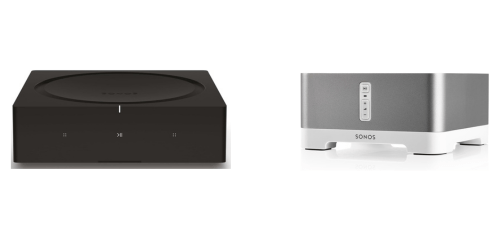
Why Do I Recommend The Sonos Amp Gen 3?
- The Sonos Amp Gen 3 has 125 watts per channel for driving larger passive speakers at higher volumes with less distortion, while the Sonos Amp Gen 2 has 55 watts per channel.
- Sonos Amp Gen 3 comes with HDMI ARC for direct TV connection and synchronized volume control using a TV remote, whereas the Sonos Amp Gen 2 uses analog audio input only.
- It supports AirPlay 2 to enable direct wireless streaming from Apple devices and easy multiroom casting, while the Sonos Amp Gen 2 supports no AirPlay standard.
- The Sonos Amp Gen 3 features a newer processor for faster app responsiveness and smoother system updates over time, whereas the Sonos Amp Gen 2 uses an older processing platform.
- Sonos Amp Gen 3 supports Trueplay tuning to automatically optimize sound based on room acoustics and speaker placement, while the Sonos Amp Gen 2 does not support Trueplay.
- It includes dual-band Wi-Fi for more stable wireless performance in congested networks, while the Sonos Amp Gen 2 which uses single-band Wi-Fi.
- The Sonos Amp Gen 3 has improved thermal management for sustained high-volume playback without overheating, whereas the Sonos Amp Gen 2 relies on a more basic cooling design.
- Sonos Amp Gen 3 supports more flexible home theater integration for powering front or surround speakers in a TV setup, while the Sonos Amp Gen 2 is limited to music-focused configurations.
Maybe the Sonos Amp Gen 2 can make you comfortable because it’s a little bit cheaper than the Sonos Amp Gen 3. But you have to compromise all the above-mentioned features. Now the Decision is Yours. I hope it was helpful to choose the right one.
Side-by-Side Comparison
| Feature | Sonos Amp Gen 3 | Sonos Amp Gen 2 |
| Amplifier power (per channel) | 125 W | 55 W |
| HDMI input | Yes | No |
| TV remote control integration | Yes (via HDMI) | No |
| AirPlay support | AirPlay 2 | None |
| Wireless Wi-Fi band | Dual-band | Single-band |
| Internal processing | Newer platform | Older platform |
| Surround speaker role | Flexible configuration | Limited configuration |
| Trueplay tuning | Yes | No |
| Subwoofer control options | Advanced | Basic |
| Impedance handling | 4–8 ohm optimized | 6–8 ohm standard |
| Network latency handling | Improved | Standard |
| Thermal design | Enhanced cooling | Standard cooling |
| Multiroom switching | TV + music optimized | Music optimized |
| Boot/startup time | Faster | Standard |
| DSP performance | Higher | Lower |
| Volume control precision | Fine | Standard |
| Price | Check Amp Gen 3 Price | Check Amp Gen 2 Price |
What Common Both Can Do?
- Sonos multiroom support: Both amplifiers integrate fully into the Sonos ecosystem, allowing audio to be played across multiple rooms at the same time. This makes it easy to synchronize music throughout an entire home.
- Passive speaker amplification: Each model is designed to power traditional passive speakers rather than using built-in drivers. This allows users to choose their preferred speakers and upgrade them independently of the amplifier.
- Stereo output (L/R): Both devices provide left and right channel stereo output for standard two-speaker setups. This ensures proper channel separation and balanced soundstage reproduction.
- Analog line-in: Each amplifier includes an RCA analog input for connecting external sources such as turntables (with preamp), CD players, or streamers. This allows non-streaming sources to be integrated into a Sonos system.
- Subwoofer output: Both models include a dedicated subwoofer output for adding a powered sub. This enables improved low-frequency performance in music and home audio setups.
- Ethernet connectivity: Each unit supports wired Ethernet networking for stable and low-latency connections. This is useful in environments with congested or unreliable Wi-Fi.
- Wi-Fi connectivity: Both amplifiers can connect wirelessly to a home network. This allows flexible placement without requiring a physical network cable.
- Sonos S2 app compatibility: Both models are controlled through the Sonos S2 app. This provides a consistent user interface for setup, tuning, grouping, and playback control.
- Streaming services integration: Each amplifier supports direct streaming from major music services through the Sonos platform. This removes the need for external streamers or Bluetooth sources.
- Music library playback (local/network): Both devices can access and play music stored on local computers or network-attached storage. This is useful for users with personal music collections.
- Voice assistant support via Sonos system: Both models work with voice assistants when paired with compatible Sonos voice-enabled speakers. This enables hands-free playback and basic system control.
- Grouping with other Sonos rooms: Each amplifier can be grouped with other Sonos products for synchronized playback. This allows flexible room combinations depending on listening needs.
- Software updates via Sonos: Both receive firmware and feature updates directly from Sonos. This helps maintain system stability and long-term usability.
- Digital signal processing (DSP): Each amplifier uses DSP for audio management and system tuning. This ensures consistent sound quality and reliable performance across different speakers.
- Volume control from Sonos app: Both models allow precise volume adjustment directly within the Sonos app. This provides centralized control across all rooms and sources.
- Line-in source sharing to other rooms: Audio connected through the line-in can be streamed to other Sonos rooms on both models. This allows a single external source to be enjoyed throughout the home.
- Stereo speaker pair support: Each amplifier supports a standard two-speaker configuration in a single zone. This makes both suitable for traditional stereo listening setups.
Common Features
| Feature | Sonos Amp Gen 3 | Sonos Amp Gen 2 |
| Sonos multiroom support | Yes | Yes |
| Passive speaker amplification | Yes | Yes |
| Stereo output (L/R) | Yes | Yes |
| Analog line-in | RCA | RCA |
| Subwoofer output | Yes | Yes |
| Ethernet connectivity | Yes | Yes |
| Wi-Fi connectivity | Yes | Yes |
| Sonos S2 app compatibility | Yes | Yes |
| Streaming services integration | Yes | Yes |
| Music library playback (local/network) | Yes | Yes |
| Voice assistant support via Sonos system | Yes | Yes |
| Grouping with other Sonos rooms | Yes | Yes |
| Software updates via Sonos | Yes | Yes |
| Digital signal processing (DSP) | Yes | Yes |
| Volume control from Sonos app | Yes | Yes |
| Line-in source sharing to other rooms | Yes | Yes |
| Stereo speaker pair support | Yes | Yes |
| Price | Check Amp Gen 3 Price | Check Amp Gen 2 Price |
FAQ
Is Sonos Amp Gen 3 compatible with the Sonos S2 app? Is Sonos Amp Gen 2 compatible with the Sonos S2 app? Do both Sonos Amp Gen 3 and Sonos Amp Gen 2 support multiroom audio? Can both models power passive speakers? Do both Sonos Amp generations support a subwoofer connection? Do both Sonos Amp Gen 3 and Gen 2 include an analog line-in? Can audio from the line-in be shared to other Sonos rooms on both models? Do both models support Wi-Fi connectivity? Do both Sonos Amp generations include an Ethernet port? Are streaming services supported on both Sonos Amp models? Can both Sonos Amp Gen 3 and Gen 2 be grouped with other Sonos speakers? Do both models receive software updates from Sonos? Do both amplifiers support stereo speaker configurations? Can both Sonos Amp models be controlled from the Sonos mobile app? Are both Sonos Amp Gen 3 and Gen 2 suitable for whole-home audio systems? |